The Feast of the Dedication of the Papal Basilica of St. Francis of Assisi: May 25th
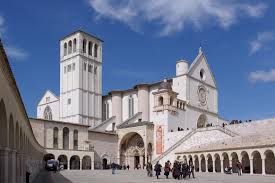
The Papal Basilica of St. Francis of Assisi stands in Assisi, Italy, the city where St. Francis was born and where his mortal remains are venerated today. The basilica is one of the most important Franciscan pilgrimage sites in the world. With the adjoining Sacro Convento, it forms one of the most recognizable landmarks of Assisi and has been part of a UNESCO World Heritage Site since 2000.
This feast recalls the dedication of the basilica built in honor of St. Francis and the early history of the shrine where his remains were placed in 1230. The May 25 observance is closely connected with the solemn transfer of St. Francis’ remains from their first resting place in Assisi to the new basilica.
The Basilica Complex
St. Francis died in October 1226 and was first buried in the Church of San Giorgio in Assisi, which later became part of the Basilica of St. Clare. Soon after Francis’ death, Cardinal Hugolino, a friend and protector of Francis, was elected Pope Gregory IX. He quickly began the process that led to Francis’ canonization and made plans for a pilgrimage church to house the saint’s remains.
The basilica was built on a hill west of Assisi once known as the “Hill of Hell,” traditionally associated with executions and death. After the construction of the basilica, the hill became known as the “Hill of Paradise,” a striking transformation that reflects the hope and grace associated with Francis’ life and witness.
On July 16, 1228, Pope Gregory IX canonized Francis in Assisi. The next day, July 17, Gregory laid the cornerstone for the new church. Construction moved quickly, and Brother Elias of Cortona, one of Francis’ early companions, was entrusted with oversight of the work.
In 1230, Pope Gregory IX named the new basilica the Caput et Mater — “Head and Mother” — of the Order of Friars Minor. The basilica would later be elevated by Pope Benedict XIV in 1754 to the rank of a papal basilica and papal chapel.
The basilica is built into the side of a hill and includes two churches, known as the Lower Church and Upper Church, as well as the crypt where St. Francis’ remains are preserved. The Lower Church was ready to receive Francis’ body in 1230. Work on the Upper Church continued afterward, and both churches were solemnly consecrated by Pope Innocent IV in May 1253.
The basilica is also renowned for its extraordinary medieval frescoes and sacred art, including works associated with Cimabue, Giotto, Simone Martini, and Pietro Lorenzetti. UNESCO recognizes Assisi and the Basilica of San Francesco as a fundamental reference point in the development of Italian and European art and architecture.
Transfer of St. Francis’ Remains
On Pentecost, May 25, 1230, the mortal remains of St. Francis were brought from San Giorgio to the new basilica and placed beneath the main altar. Some accounts indicate that Francis’ body may have been moved before the public ceremony, likely out of concern for the security of his relics and to prevent his remains from being stolen or dispersed.
The transfer caused controversy with Pope Gregory IX because the remains had been moved without proper ecclesiastical permission. The pope imposed penalties on the city of Assisi and on the basilica, though these were later rescinded.
For centuries, the exact burial place of St. Francis within the basilica remained hidden. In 1818, his tomb was rediscovered beneath the main altar of the Lower Church. A crypt chapel was later constructed so pilgrims could visit and pray at the saint’s resting place.
Today, pilgrims from around the world continue to come to the Papal Basilica of St. Francis of Assisi to pray at his tomb and encounter the witness of a saint whose life of poverty, peace, humility, and love for Christ continues to inspire the Church and the world.